CAMC International Closes 140th Canton Fair with Methanol Truck Enquiries and New Market Contacts
Just another WordPress site
Press Release Disclaimer: This is a press release distributed through the XPR Media network. It has not been independently verified by our newsroom.
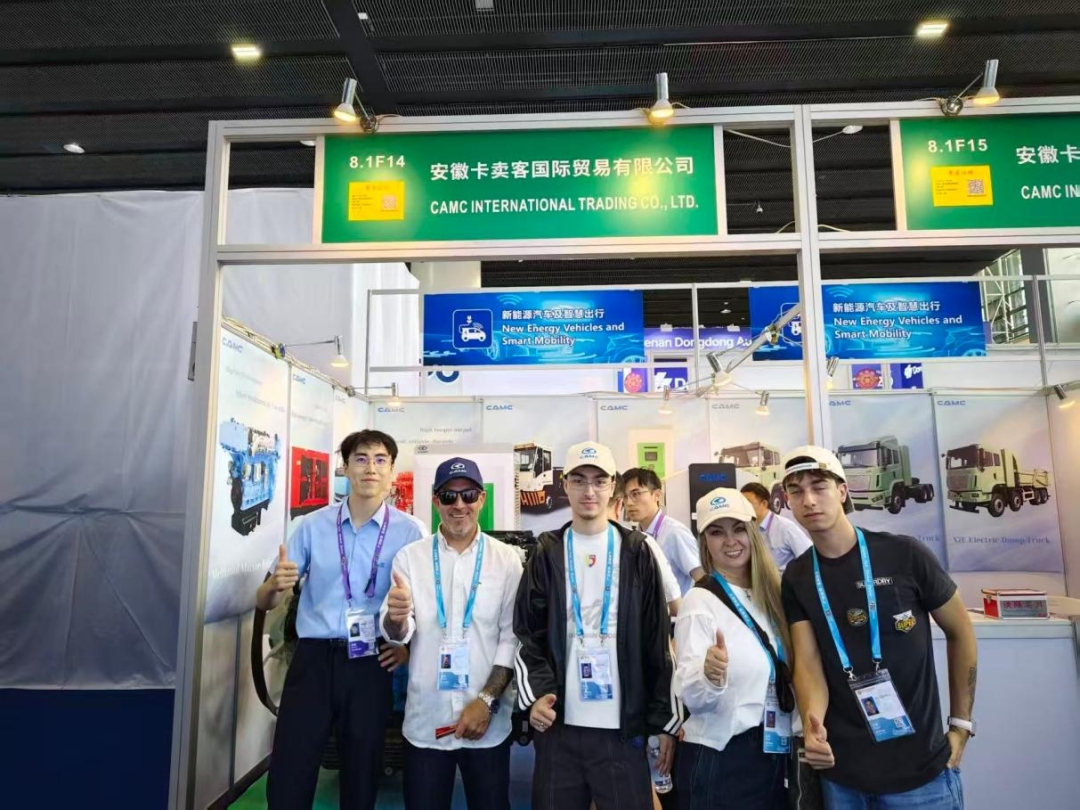

Guangzhou, China – November 11, 2026 – The 140th Canton Fair closed in Guangzhou, China, in October 2026, after a multi-day run that brought manufacturers and buyers together from markets around the world. CAMC International Trading Co., Ltd. exhibited at booth 8.1F14 in the New Energy Vehicles and Smart Mobility section, where it presented methanol-powered heavy trucks, new energy tractors, generator sets and customized trailer products. During the show the company’s team met buyers from Southeast Asia, Central Asia, South America and Africa, discussed vehicle specifications, certification and delivery terms, and recorded a series of enquiries that it began following up once the exhibition ended.
Brands, importers and distributors attending the fair are invited to contact Jeff Yu to arrange discussions about product requirements, private-label development and manufacturing cooperation.
CAMC International booth 8.1F14 with international visitors during the 140th Canton Fair.
The fair has long served as a window on China’s export trade, and the New Energy Vehicles and Smart Mobility section gathered vehicle makers, component suppliers and charging solution providers in one area. For CAMC International, the event was the latest step in an effort to expand clean-energy exports, following earlier development work on methanol, gas and electric powertrains aimed at markets with differing fuel availability and emission rules.
Steady Buyer Traffic and Technical Discussions at the Booth
Throughout the fair, the booth received a steady flow of professional visitors. Staff demonstrated vehicle hardware and component samples, and walked buyers through power output, emission standards, overseas certification and maintenance arrangements. A blue methanol engine stood at the centre of the display, beside electric drive units and DC fast-charging equipment, and display panels presented the wider truck range.
Visitors with technical backgrounds examined the cylinder block, intake and exhaust layout and electronic control unit, and raised questions on fuel adaptability, service intervals and parts availability. Several asked how the vehicles performed on long gradients with a full load, and others requested details on cold-start behaviour where winter temperatures fall well below freezing. Staff answered these questions on site and noted the ones that required follow-up documentation.
The visitor mix spanned importers and dealers as well as end users from mining, construction and logistics companies. Some came with a single vehicle requirement and wanted a quotation the same day, while others were assessing whether to add a clean-energy line to an existing product portfolio. Buyers from landlocked markets asked about overland delivery routes and transit documentation, and buyers from coastal markets focused on port handling and shipping schedules.
Methanol Trucks Formed the Core Exhibit
The main exhibit line comprised H9 and M5 series methanol dump trucks and tractor units, fitted with the GS13M methanol engine. Company materials list a rated power of 500 kW, a maximum torque of 2,600 N·m and a methanol tank capacity of 1,000 litres. The vehicles were presented as meeting emission requirements in several overseas regions and as holding a number of international certifications obtained before the show.
Methanol drew attention for reasons that combine cost and emissions. Its liquid form allows storage and distribution through existing fuel infrastructure, and its higher octane rating supports higher compression ratios, which contributes to thermal efficiency. In markets where methanol supply is established, operators compared fuel cost per kilometre against diesel and asked about consumption under loaded operation.
The booth also presented the wider engine range, including diesel, gas and alcohol-hydrogen options, so that buyers could match a powertrain to local fuel prices and regulatory requirements. Diesel units remained the practical choice where fuel networks are mature, while gas and alcohol-hydrogen solutions were offered for markets moving toward cleaner fuels.
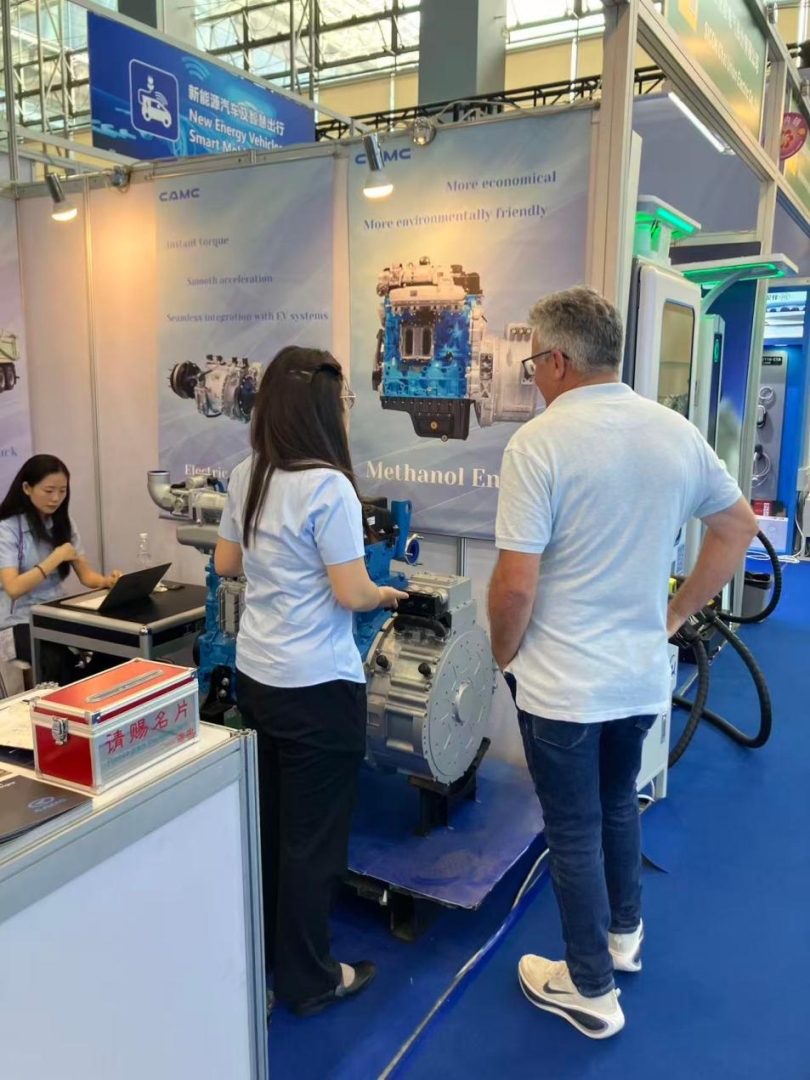
Booth staff explained the methanol engine and electric drive products to an international visitor.
New Energy Vehicles and Supporting Equipment
Alongside the methanol models, the booth displayed electric tractors, electric dump trucks and electric concrete mixer trucks. The X7E electric dump truck appeared on the display panels as one of the models offered for mining, infrastructure sites, slag transport and sand and gravel yards, where zero exhaust emissions, low noise and controllable running costs matter.
Electric tractors were positioned for port, hub-to-spoke and short-haul logistics routes, with configurations supporting both battery swapping and conventional charging. Staff discussed range, charging time, payload and battery warranty, and explained how these figures change with terrain, load and climate. For depot-based fleets, the company presented truck and charger as a combined package.
Charging equipment on display included DC dual-gun chargers rated from 60 kW to 120 kW and supporting GB/T, CCS1 and CCS2 connectors, together with AC wall-mounted units for smaller fleets. Staff explained how charger numbers and layout could be planned around operating hours so that vehicles stayed available through peak periods.
The booth also showed FARIZON diesel generator sets for construction sites, mining areas and remote locations without stable grid supply, and GLAB customized trailers with adjustable body dimensions and load structures for equipment transfer and mobile exhibition use. Both lines extended the display beyond road vehicles into power supply and specialized transport equipment.
For construction logistics, electric concrete mixer trucks combined a stable mixing drum with quieter, emission-free operation, which suited projects inside city limits where noise and exhaust restrictions applied. Staff explained that mixing rotation was maintained through the electric system, so work could continue during unloading without relying on the diesel engine. Buyers working on urban redevelopment projects asked how the vehicles compared with diesel mixers on cycle time and energy use.
Quality Control, Compliance and Export Documentation
Quality control ran across the product range. Material selection and incoming inspection were linked to production checks and finished-product testing, and components were assessed by function and specification, with separate criteria for structural parts, electrical systems and safety-related items. For engines, checks covered performance, durability and emissions-related parameters against agreed specifications.
Batch identification and manufacturing records supported traceability, so that finished products could be linked back to material and production information when questions arose. For export orders, specifications, testing requirements and supporting documents were reviewed against the destination market before shipment.
Documentation covered product identification, production steps and inspection results for each order. Where a destination market imposed technical regulations, the applicable requirements were reviewed during development and the necessary testing was coordinated with partners, so that certification files were assembled before delivery rather than after arrival.
The export team also walked buyers through customs declaration, commodity classification, market access certification and logistics delivery. For methanol equipment intended for European markets, the company completed the relevant emission certification work ahead of the fair, which allowed discussions on volume orders to move forward without waiting on paperwork.
Customization Requests and After-Sales Arrangements
Many visitors arrived with requests shaped by local conditions. Buyers asked for suspension tuning, cooling capacity and electronic control settings adjusted to road quality, axle load rules and climate, and some asked about right-hand-drive versions and locally sourced components. The sales and engineering teams recorded these points during the show and passed them to the domestic research and development department as input for regional variants.
After-sales support was discussed in similar detail. The company described parts warehousing and technical service points in several overseas regions, along with installation guidance, scheduled maintenance and breakdown response. Buyers who already operated mixed fleets asked how service intervals compared with their existing vehicles, and whether consumables could be sourced locally rather than imported.
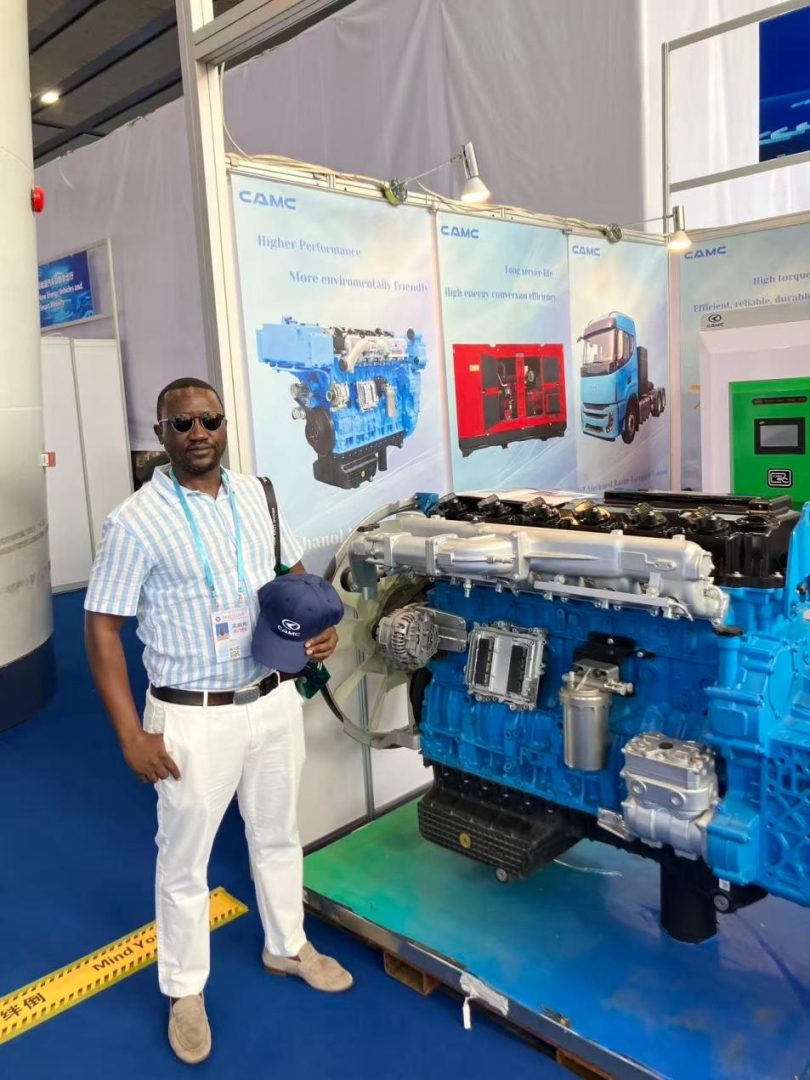
An international buyer inspected the methanol engine exhibit at the booth.
Post-Fair Follow-Up and Market Outlook
Once the exhibition closed, the team began calling back the buyers it had met, confirming order details, delivery schedules, payment terms and spare parts plans. For buyers who had indicated intent during the show, engineers started preparing configuration drawings and detailed quotations so that contracts could be finalized.
The enquiries reflected a wider shift in demand. Rising diesel operating costs have pushed construction, mining and long-haul operators to look at lower-carbon alternatives, while tightening emission rules in several markets have narrowed the options available. China’s methanol commercial vehicle supply chain has developed across vehicle manufacturing, engine development and fuel supply, which supported the pricing and delivery terms discussed at the booth.
Company representatives said the value of a trade fair lay in face-to-face verification. Buyers who inspected vehicles, tested specifications and met the service team in person moved faster on procurement decisions than those working from catalogues alone, and several returned to the booth more than once during the run of the show.
About CAMC International
CAMC International Trading Co., Ltd. is the international trading arm of CAMC, focused on exporting heavy-duty trucks, engines and new energy commercial vehicles. Its portfolio covers methanol, gas and diesel engines, electric and diesel trucks, generator sets and customized trailers. The company serves overseas distributors, fleet operators and end users, and supports export projects with certification, logistics and after-sales arrangements. Product information, specifications and enquiry channels are available through the official website at camcexport.com.
Media Contact
Company Name: CAMC International Trading Co., Ltd.
Contact Person: Jeff Yu
Email: Send Email
Phone: +86 133 3555 0888
Country: China
Website: https://www.camcexport.com/